Monday, 19 February 2018

North Staffordshire Royal Infirmary, Stoke-on-Trent

History

The foundation stone of the North Staffordshire Royal Infirmary was laid on 25th June 1866 by H.R.H. The Prince of Wales, and the hospital was formally opened by the duchess of Sutherland, 16th December 1869.
 
The origins of the hospital can be traced back to 1804 when the “House of Recovery” was opened to the public in the nearby suburb of Etruria. That hospital was soon replaced with a larger infirmary, opening in 1819. The infirmary suffered subsidence and plans were drawn up to build a new hospital in Hartshill.
 
The pavilion principle was adopted by the architects, and the main building had accommodation for 167 beds, with 1,500 cubic feet of air being allowed for each patient in the ordinary wards, and 1,875 cubic feet in the “special case” wards, and in the fever hospital, which forms a detached block. Another separate building was an asylum for incurables, founded by Mr Smith Child. In total the cost to build the infirmary was £33,704
 
The hospital saw expansion over the years including the addition of a dedicated operating block in the 1950s. The block consists of three theatres and a recovery ward, plus associated facilities such as scrub rooms. The brutalist-styled A&E building was one of the latest additions.
 
The Royal Infirmary was merged with the nearby Orthopaedic Hospital and City General Hospital to form the University Hospital of North Staffordshire. As a result, new facilities were built and all services were transferred to the new single site in 2012.  
 
Source:
https://www.bcd-urbex.com/north-staffordshire-royal-infirmary/
 
Esoteric Eric


Washpit Mill Culvert, Holmfirth

History

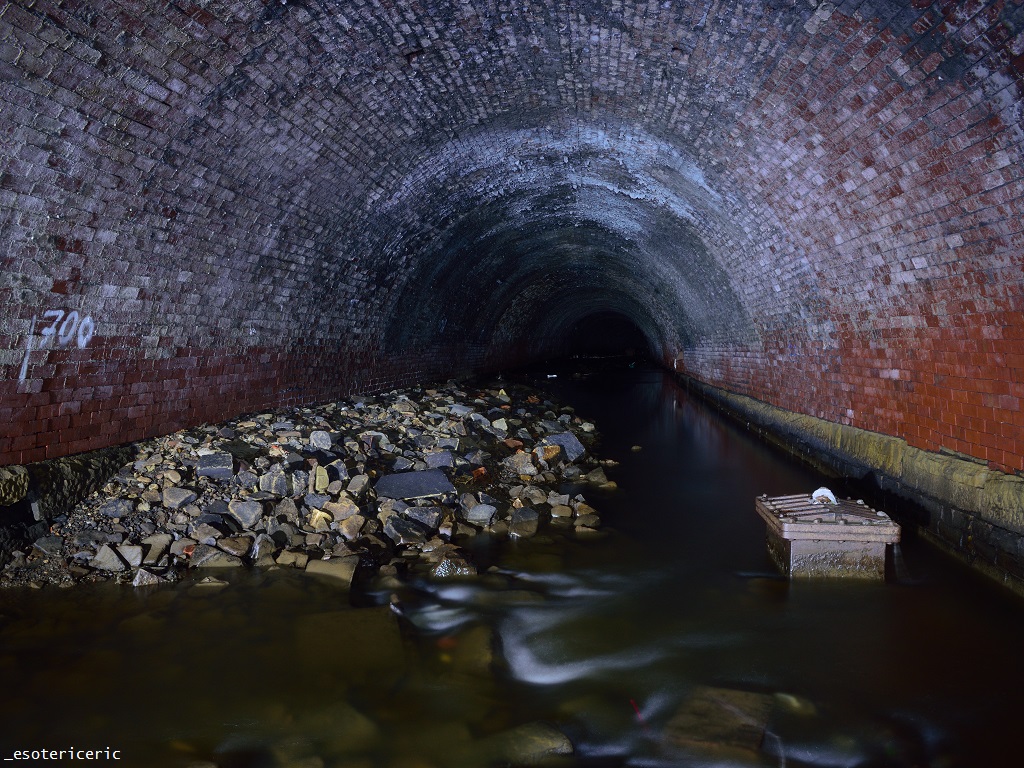
A short culvert of the River Ribble running underneath Washpit Mill in Holmfirth.

Esoteric Eric


Tuesday, 13 February 2018

Pandoras Box, Bradford

History

A CSO on the West Brook making up part of the underground Bradford flood alleviation system and completing my exploration of the known parts, including Bypass, Macro and Academy.
 
The room features a giant processor with the sewer flow running through the middle. 
 
There is a three tier chamber further up with a CCTV camera monitoring the flow which I didn't shoot due to bad air and rising water levels from the rain above.
 
Esoteric Eric


Wednesday, 7 February 2018

Pipemare, Halifax

History

A culverted section of the Hebble Brook with an array of utility pipes tangled up at the end.
 
The River Hebble, or Hebble Brook, rises just above Ovenden Moor, Yorkshire, and flows South down the geological fault which passes from Ogden, through Halifax to Salterhebble. The river has many names as it flows through the district: Ogden Brook, Mixenden Beck, The Dodge, Jumples Beck, Ovenden Wood Brook, Halifax Brook, Salterhebble Brook.
 
Source:
https://www.28dayslater.co.uk/pipemare-halifax-may-2010.t50822
 
Esoteric Eric


Thursday, 18 January 2018

George Hotel, Huddersfield

History

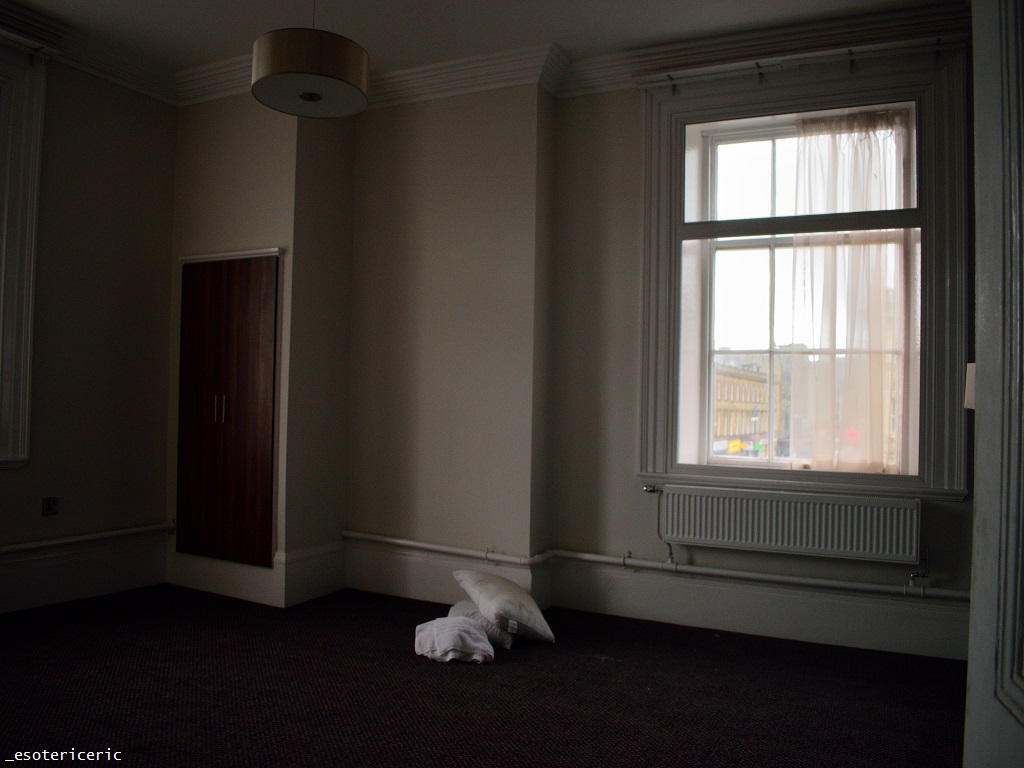
The George Hotel in Huddersfield, West Yorkshire, England, is a Grade II listed building famous as the birthplace of rugby league football in 1895. The 60 bed hotel was built in 1851 and closed in January 2013, with the receivers looking for a new buyer.
 
The three-star rated George Hotel, which has an Italianate façade, was designed by William Walker. The Victorian era hotel was built around 1851.
 
Source:
 
https://en.wikipedia.org/wiki/George_Hotel,_Huddersfield
 
Esoteric Eric