Tuesday, 16 April 2019

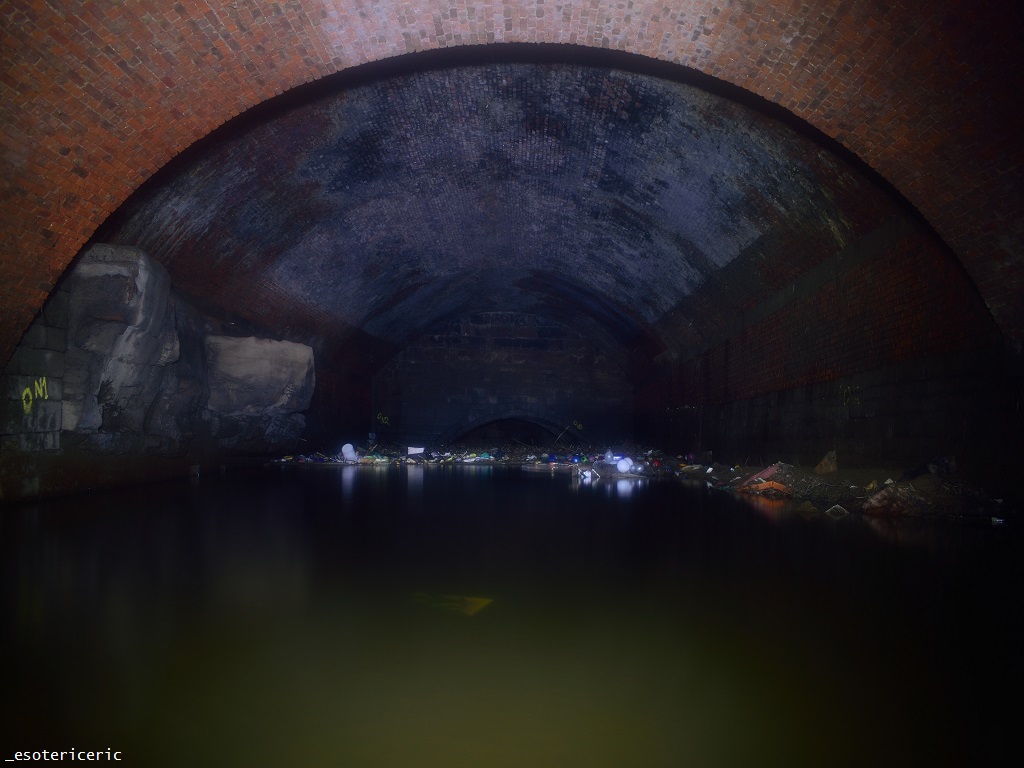
Optimus Prime, Manchester

History

A Victorian culvert allowing the River Irk to flow beneath Victoria Station for around 1km before joining the River Irwell. 

Esoteric Eric


Slim Pickings, Manchester

History

A brick-built overflow for the Work 6 interceptor, outfalling to the River Medlock.

Esoteric Eric


Monday, 15 April 2019

Nestle Rowntree, York

History

After the Nestlé takeover, the Rowntree chocolate ranges began to use the branding "Nestlé Rowntree", before eventually the Rowntree name was dropped from the packaging altogether, except on Rowntree's Cocoa and the Fruit Pastilles and Fruit Gums lines. The Mackintosh branding was dropped from all former Rowntree Mackintosh products except for Mackintosh's Toffee.
In the six years following the takeover, the Nestlé Rowntree workforce was reduced by 2,000. The Nestlé Rowntree factory in Norwich closed in 1994, and Rolo, Yorkie, and Easter-egg production was moved to York.
In September 2006, it was announced that the manufacture of Smarties was to be relocated to Hamburg, resulting in 645 job losses at the York factory. Production of Dairy Box was relocated to Spain, and Black Magic to the Czech Republic.
In May 2009, Nestlé launched a new jelly sweet, Rowntree's Randoms, and in April 2012, another new jelly sweet, Fruit Bottles, both under the Rowntree's brand.
Nestlé has invested more than £200 million in the Rowntree business since 1988, making the York site one of the world's largest confectionery factories. Nestlé's global research centre for confectionery is also based in York, and recently doubled in size following a £7 million investment.

Source:
https://en.wikipedia.org/wiki/Rowntree%27s

Esoteric Eric


Monday, 8 April 2019

St. Johns Hospital, Lincoln

History

St John's Hospital, Bracebridge Heath was a mental health facility at Bracebridge Heath in Lincolnshire.

The hospital was designed by John Hamilton and James Medland in the Italianate style as the Lincolnshire County Lunatic Asylum and opened in 1852. It became Bracebridge Pauper Lunatic Asylum in 1898 and Bracebridge Mental Hospital in 1919. It served as an Emergency Hospital during the Second World War and, having been renamed Bracebridge Heath Hospital in 1939, joined the National Health Service in 1948. It went on to become St John's Hospital, Bracebridge Heath in 1961.
The hospital closed in December 1989 and the site has been sold to a property developer who has built 183 luxury homes and apartments there. The original hospital buildings are classified as Grade II listed buildings.

Source:
https://en.wikipedia.org/wiki/St_John%27s_Hospital,_Bracebridge_Heath

Esoteric Eric


Tuesday, 2 April 2019

Robert Fletcher & Son's, Social Club, Oldham

History

The former social club that served the Greenfield Paper Mill, soon due to be demolished and replaced by four houses.

Esoteric Eric


Sunday, 24 March 2019

Wellington Rooms, Liverpool

History

The Neo-classical building was designed by the architect Edmund Aikin and built between 1815–1816 as a subscription assembly room for the Wellington Club. It was originally used by high society for assemblies, dance balls and parties. The Wellington Club was wound up in 1922.
Between 1923 and 1940 it was the Embassy Club and was used for tea dances, classes and weddings. During WW2, the building became the first base for the Rodney Youth Centre though bomb damage in 1941 damaged all of the original ceilings with the exception of the ballroom.
The building officially opened as Liverpool Irish Centre on 1 February 1965 hosting ceilis, music, drama performances as well as serving as a base for clubs and societies.
The Wellington Rooms were designated a listed building (Grade II*) in the 1950s, but this official protection did not prevent the property becoming derelict after the Irish Centre closed in 1997.

Source:
https://en.wikipedia.org/wiki/Wellington_Rooms,_Liverpool

Esoteric Eric


Sunday, 10 March 2019

Claughton Centre, Dudley

History

Built in 1904, this Edwardian school building was first called Dudley Upper Standards School until 1957 when it was named after the Dudley town mayor, Sir Gilbert Claughton. It was closed in 1990 when local schools were merged, from this point on wards it was used as council offices, youth centre, and community meeting/conference use and was granted a new extension in 1993 of sports facilities and class rooms.

Source:
https://www.28dayslater.co.uk/threads/the-claughton-centre-dudley-march-2019.116849/

Esoteric Eric